
















Copyrighted material may appear differently: some videos reuse entire works without changes, while others transform them through parody, remix, or pastiche. Parody typically involves exaggeration, distortion, or humorous imitation, while pastiche may be more of an homage, as in memes, GIFs, mashups, fan art, or fan fiction.
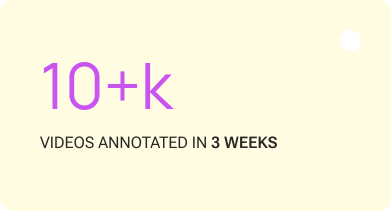
To capture these nuances, operators worked with a structured questionnaire. They reviewed each video from a batch of 10,000 and answered a set of 11 questions, after which a majority value was calculated, and the final answer was based on consensus.
Through simple yes/no and multiple-choice formats, the operators were asked to decide whether the video contained commercial elements, copyrighted works (music, movies, TV, brands), and whether these works were presented in their original form or modified. Modifications could take many forms: alteration of audio (pitch, tempo, remix), visual changes (filters, animations, overlays), combining multiple works (compilations, mashups), replacing original elements (swapping visuals or music), or even creating derivative works like fan art and fan fiction.
The questionnaire also covered the technical and stylistic aspects of the videos, such as whether the quality was amateur or professional, and whether the content fell into additional categories like ASMR, trends, memes, or adult content.
The client received both the consensus results and all individual responses, allowing them to track polarities and discrepancies across the dataset.