
LLM Meaning: What does the abbreviation LLM stand for in AI? A comprehensive explanation
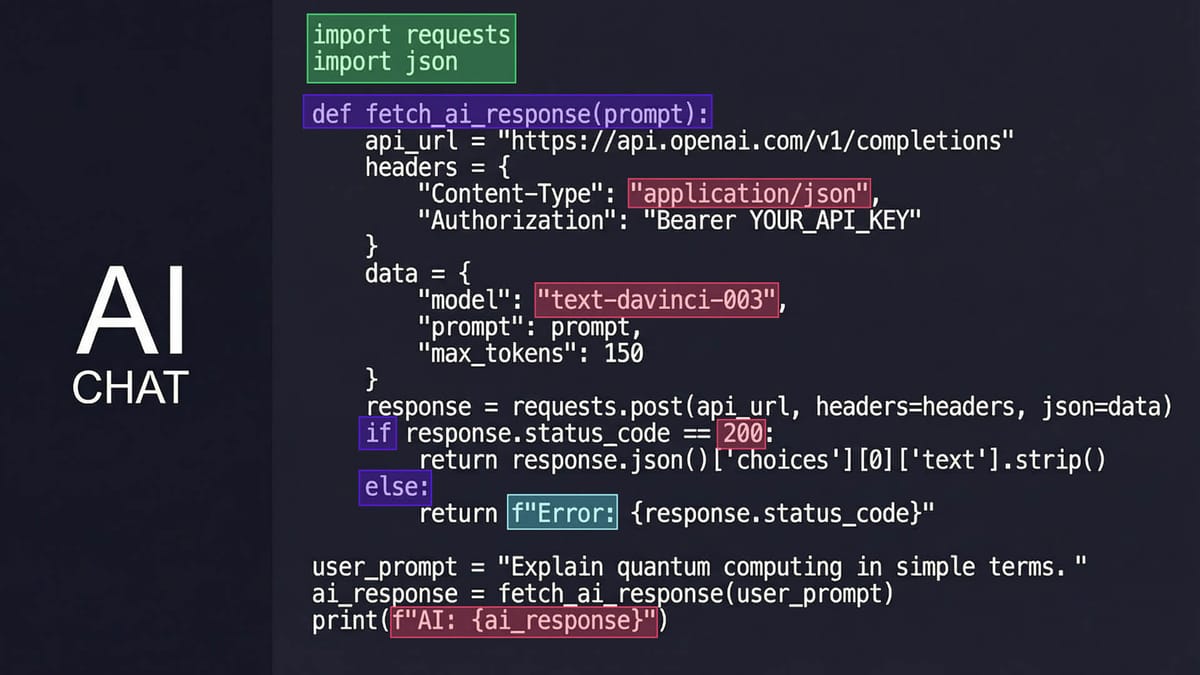
LLM is a large language model (large language model meaning), a type of language model trained on massive amounts of text to predict and generate natural language.
These models are powered by core assistants like ChatGPT, Gemini, Claude, and Perplexity. They provide summarization, translation, reasoning, and conversational interfaces that transform unstructured words into helpful information.
At the same time, the models inherit biases from the training data, so proper governance, evaluation, and supervision are required.
Quick Take
- LLM (what does llm mean) is a big language model that predicts and generates natural language.
- Large language models power the core chat assistants, enabling them to generalize to multiple tasks.
- Transformers and RLHFs build context length, safety, and factuality.
- Models increase the speed of content and analytics, but require supervision to manage bias and risk.

What is LLM and how does it work?
LLM is a type of artificial intelligence designed to understand, generate, and believably interact with human language.
Key features of LLM
- Large. These models contain billions of parameters and are trained on large amounts of text data. This enables them to identify intricate patterns in language.
- Linguistics. They focus on natural language processing (NLP), which allows them to read, translate, summarize, and generate text.
- Model. They utilize the Transformer architecture, which enables them to process lengthy sequences of words and comprehend context.
How do they work?
At a fundamental level, LLMs are large next-word prediction systems. They train on data to determine the probability of a particular word occurring after a sequence of previous words. This allows them to:
- Answer questions.
- Generate creative text.
- Generalize.
- Translate.
- Imitate style.
Fundamentals of LLM Learning
The training process is based on three fundamental components: Data, Tokenization, and Self-Supervised Learning. Let's look at each of these pillars in more detail.
1. Data is the raw material for any LLM. Without a vast and diverse dataset, the model will be unable to learn the complexity and nuances of human language. LLMs are trained on terabytes of text data collected from various sources:
- Web crawling.
- Books.
- Articles and academic papers.
- Code.
- Chats, forums, and social networks.
Raw data is "noisy" and contains errors, repetitions, or unwanted content. Before training, it undergoes intensive cleaning:
- Duplicate removal.
- Filtering dangerous, toxic, or biased content.
- Formatting normalization.
Data quality affects the capabilities and "personality" of the model. Models trained on high-quality texts show better reasoning and coherence.
2. Tokenization is the process of converting raw text into a numerical format that is processed by a neural network. It is a "translator" between human language and mathematics. A token is the basic unit of language that the model perceives. It can be:
- A whole word.
- A part of a word.
- A single character.
- A punctuation mark.
The model has a fixed dictionary of tokens (usually from 50,000 to 250,000). Each token in the dictionary has a unique numerical identifier.
Tokenization determines how the model "sees" the language. Effective tokenization allows the model to work with new or rare words by breaking them down into familiar parts.
3. Self-Supervised Learning. LLMs are primarily trained using a self-supervision paradigm, which is key to their scalability. Unlike traditional supervised learning, which requires labels, self-supervised learning generates its own labels directly from the input data. This enables the use of billions of texts without requiring human intervention for labeling.
The main task in most LLMs is Next-Token Prediction. The model is given a sequence of tokens and has to predict which token will come next.
Loss Function Calculation. The difference between the model's prediction and the actual next token is referred to as the "loss." The goal of training is to minimize this loss by adjusting billions of model parameters. When attempting to accurately predict the next word in a vast corpus of texts, the model does more than memorize. It builds an internal, statistical model of the world by learning grammatical rules, semantic connections, factual knowledge, and logical structures of language.

Inside the Architecture: Transformers and Attention
Modern LLMs are powerful because of the Transformer architecture. It replaced the old Recurrent Neural Networks (RNNs) and the field of Natural Language Processing (NLP). The primary mechanism behind the Transformer is the Attention Mechanism, which enables the model to assess which parts of the input text are most relevant for predicting or understanding the current word.
Embeddings, Positional Encodings, and Transformer Layers
1. Embeddings. Before any neural network can process tokens, they must be converted into a format that is understandable for mathematical operations, i.e., into vectors. Embeddings convert discrete tokens (words) into vectors of fixed dimension. These vectors are placed in a multidimensional space so that tokens with similar values are placed closer together. Each token's numeric ID is mapped to a vector that will be constantly updated and "learned" as the model is trained.
2. Positional Encoding. Transformers, unlike RNNs, process all tokens in a sequence at once, rather than one at a time. This is a speed advantage, but creates a problem: the model loses information about the word order. Positional encoding adds a vector to the embedding of each token. This vector contains information about its absolute or relative position in the sequence. Sine and cosine functions are used for this.
3. Transformer Layers. The Transformer architecture consists of several identical layers, which are organized as:
- Encoder creates a rich representation of the input text.
- Decoder uses this representation to generate the output text. Used in most LLMs. The model creates text using only previously generated tokens as input. Each Transformer layer has main subsystems:
Multi-Head Self-Attention is the heart of the Transformer. It enables the model to assess the significance of other words in the input sequence when processing the current word.
Self-Attention. When processing a word, the model determines the importance of other words in the sentence to understand its meaning in that context.
Multi-Head. The model employs not one, but several independent attention "heads" to examine the input data from different perspectives simultaneously. Each "head" can focus on various aspects of the language.
Feed-Forward Network. After attention has identified contextual connections, this data is passed through a simple feed-forward neural network. This component applies nonlinear transformations to the vectorized data. It helps to "generalize" and "fix" the knowledge obtained from the attention mechanism. The same network is applied to each token independently, but only after the attention mechanism has embedded contextual information into its vector.
These layers are repeated multiple times, enabling the model to generate complex and hierarchical representations of the text.
Queries, Keys, Values, and Attention Weights
- Weight Calculation. For each Query word, a similarity score is calculated with the Keys of all other words in the sentence. The higher the similarity, the higher the Attention Weight.
- Summarization. The resulting Attention Weights are used to weight each Value.
- Result. All weighted Values are summed, creating a single, rich contextual vector for the original Query word.
Thus, thanks to this mechanism, each word that emerges from the attention layer is a contextually enriched vector containing relevant information from the rest of the sentence.
Fine-tuning, instruction tuning, and RLHF
Instruction tuning trains a model to follow user instructions and preferred styles. This improves consistency in how the model formats responses and performs tasks.
RLHF and tuning
RLHF (Reinforcement Learning with Human Feedback) is a methodology for achieving tuning and tuning LLMs so that their responses follow instructions and are safe and consistent with human values.
Reasoning and Chain of Thought
Reasoning is the general ability of a model to make logical inferences, solve multi-step problems, and explain cause-and-effect relationships. Chain of Thought (CoT) is a technique that enhances this ability. It forces the LLM to generate intermediate stages of reasoning aloud. This step-by-step decomposition of the problem makes the solution process more transparent, helps the model avoid errors, and enables it to complete complex arithmetic, logic, and programming tasks successfully.
Text generation and summarization
These models create drafts, headlines, and summaries at scale. They condense long reports into concise summaries for faster decision-making.
Capabilities and Use Cases
Limitations, Bias, and Responsible Use
Despite their impressive capabilities, LLMs are not perfect and carry significant risks. Understanding their limitations and ethical challenges is crucial for the responsible implementation of these technologies.
Multimodal and new architectures
Multimodal models are systems that can process, understand, and generate information coming from several different modalities simultaneously (text, images, audio, video). These models are trained on datasets where both types of information are related (for example, images with captions), which allows them to respond to text queries, use visual information, or, conversely, generate images based on text descriptions.
New architectures are also being developed that optimize scalability and efficiency. One of the key innovations is the MoE (Mixture of Experts) architecture. MoE divides the model parameters into several independent subnetworks, called Experts.
When processing the input text, a special network module called the Gating Network determines which experts are most relevant for a given token and activates only a small part of them. This allows you to create models with a large number of parameters while keeping the computational cost low during inference, as only a subset of the parameters is activated. This makes these models faster and more efficient to deploy.
FAQ
What does the abbreviation LLM mean in AI (llm acronym), and why is it important?
LLM in AI stands for Large Language Model. It is essential because it is a class of deep learning models that are capable of understanding, generating, and interacting with human language at a high level.
How do LLM models process text at a high level?
LLMs convert words into numerical vectors, use an attention mechanism to assess the relevance of each word in context, and iteratively generate the most likely next token.
Where does the training data come from, and how is it prepared?
Training data for LLMs is taken from text corpora (internet, books, articles, code), and prepared by cleaning, filtering, and normalizing to remove noise, duplicates, and unwanted content before being converted into tokens.
What is self-learning, and how is it applied to these models?
Self-supervised learning is a machine learning paradigm in which a model generates its own training labels from unlabeled input data, enabling it to learn at scale.
What is the role of transformer architectures and attention mechanisms?
Transformer architectures are the foundation of modern LLMs, and the attention mechanism is a key component within them, allowing the model to weigh the importance of different parts of the input text to understand the context and generate consistent output.
What are the main limitations and risks of large language models?
The main limitations and risks of large language models include hallucinations, bias, and security issues.
